
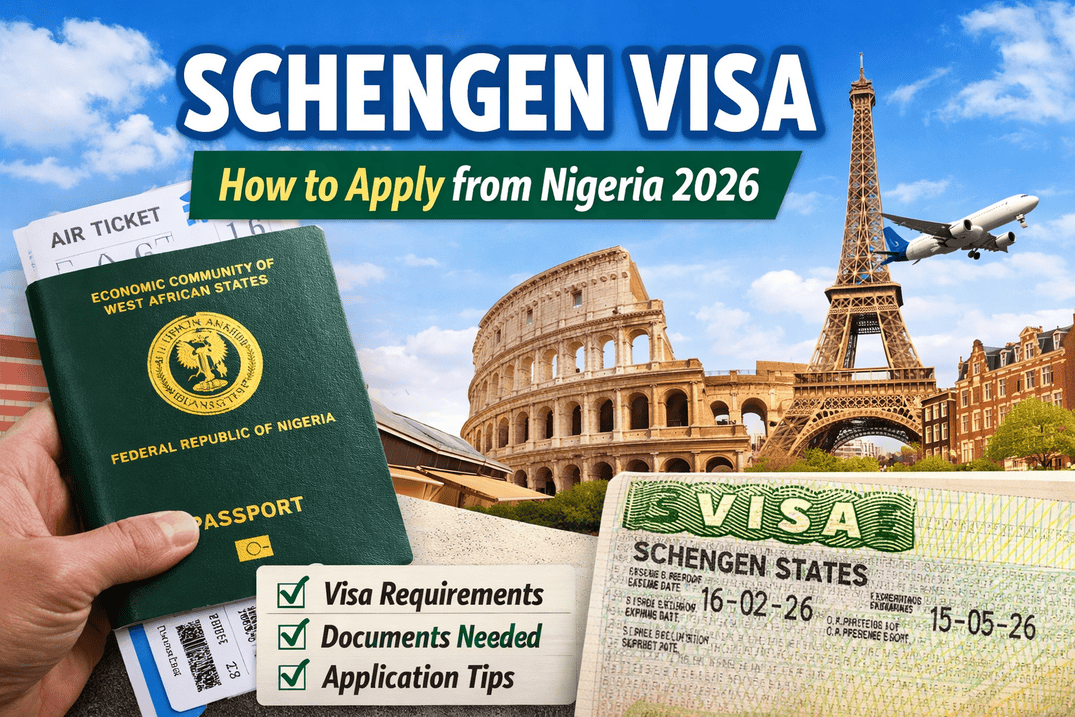
Traveling to Europe is a dream for many Nigerians, whether for tourism, business, education, or family visits. The Schengen visa allows you to visit multiple European countries with a single visa, making it a convenient option for travelers. If you’re planning your trip in 2026, this comprehensive guide will walk you through everything you need to know about applying for a Schengen visa from Nigeria.
What Is a Schengen Visa?
A Schengen visa is a short-stay visa that allows you to travel within the Schengen Area, which includes 27 European countries. With this visa, you can stay for up to 90 days within a 180-day period for purposes such as tourism, business, or visiting family and friends.
Types of Schengen Visas
Before applying, it’s important to choose the right visa type:
Tourist Visa: For leisure and sightseeing
Business Visa: For meetings, conferences, or work-related visits
Visitor Visa: To visit family or friends
Student Visa (Short Stay): For short courses or training programs
Transit Visa: For passing through a Schengen country
Step-by-Step Guide to Apply for a Schengen Visa from Nigeria
1. Determine Your Main Destination
If you plan to visit multiple countries, apply through the embassy of the country where you will spend the most time. If your stay is equal, apply through the country of first entry.
2. Choose the Right Embassy or Visa Application Center
Most Schengen countries process visa applications through authorized visa centers in Nigeria, such as VFS Global or TLScontact. Check the official website of the embassy you’re applying to for accurate information.
3. Complete the Visa Application Form
Fill out the Schengen visa application form online or download it from the embassy’s website. Ensure that all details are accurate and match your supporting documents.
4. Book an Appointment
Schedule an appointment at the appropriate visa application center. In 2026, it’s advisable to book early, as appointment slots can fill up quickly.
5. Gather Required Documents
Here are the standard documents you’ll need:
Valid international passport (at least 6 months validity)
Completed visa application form
Recent passport-sized photographs
Travel itinerary (flight reservation)
Proof of accommodation (hotel booking or invitation letter)
Travel insurance (minimum €30,000 coverage)
Proof of financial means (bank statements for the last 6 months)
Employment letter or proof of business ownership
Cover letter explaining your travel purpose
Additional documents may be required depending on your visa type.
6. Attend Your Appointment
On the appointment day:
Submit your documents
Provide biometric data (fingerprints and photo)
Pay the visa fee
Make sure you arrive early and carry all required documents.
7. Pay the Visa Fee
As of 2026, the standard Schengen visa fee is approximately:
Adults: €80
Children (6–12 years): €40
Children under 6: Free
Fees are usually paid in naira equivalent and are non-refundable.
8. Wait for Processing
Visa processing typically takes 15 to 30 working days. However, it may take longer during peak travel seasons, so apply at least 4–6 weeks before your planned trip.
9. Track Your Application
Most visa centers allow you to track your application online using a reference number.
10. Collect Your Passport
Once a decision has been made, you will be notified to collect your passport or have it delivered to you.
Tips to Increase Your Chances of Approval
Getting a Schengen visa from Nigeria can be competitive, but these tips can improve your chances:
Provide complete and accurate documents
Show strong ties to Nigeria (job, business, family)
Maintain a healthy bank balance
Write a clear and convincing cover letter
Avoid fake documents at all costs
Common Reasons for Visa Rejection
Understanding why visas get rejected can help you avoid mistakes:
Insufficient financial proof
Incomplete documentation
Lack of travel history
Unclear travel purpose
Suspicion of overstaying
If your visa is denied, you can reapply after addressing the reasons for rejection.
Best Time to Apply in 2026
The best time to apply for a Schengen visa is:
January to March: Less competition
September to November: Lower travel demand
Avoid last-minute applications during peak periods like summer and holidays.
Frequently Asked Questions
How long can I stay with a Schengen visa?
You can stay up to 90 days within a 180-day period.
Can I visit multiple countries?
Yes, the Schengen visa allows travel across all member countries.
Can I work with a Schengen visa?
No, it is strictly for short stays and does not permit employment.
Final Thoughts
Applying for a Schengen visa from Nigeria in 2026 may seem complex, but with proper planning and the right documentation, the process becomes much easier. Start early, follow the guidelines carefully, and ensure all your documents are genuine and complete.
A well-prepared application not only increases your chances of approval but also brings you one step closer to exploring Europe’s rich culture, history, and opportunities.