
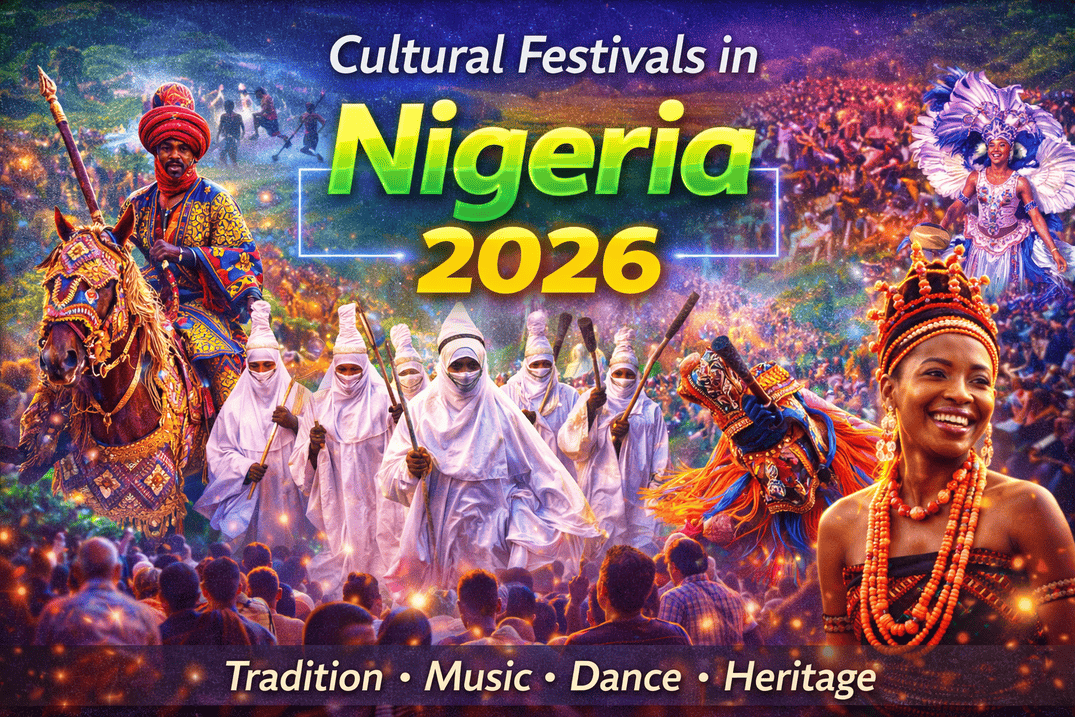
Cultural Festivals in Nigeria 2026: A Complete Guide to Heritage and Celebration
Nigeria is one of Africa’s most culturally diverse countries, home to over 250 ethnic groups, each with its own traditions, music, attire, language, and festivals. In 2026, cultural festivals across Nigeria continue to celebrate heritage, spirituality, history, and community.
From colorful street carnivals to ancient spiritual gatherings, cultural festivals in Nigeria offer unforgettable experiences for both locals and international visitors. If you’re planning to explore Nigeria in 2026, here’s your complete guide to the most anticipated cultural festivals.
Why Cultural Festivals Matter in Nigeria
Cultural festivals in Nigeria are more than entertainment events. They:
-
Preserve traditions and ancestral heritage
-
Promote tourism and economic growth
-
Showcase music, dance, fashion, and art
-
Strengthen community unity
-
Educate younger generations about their roots
These festivals are deeply meaningful and often connected to history, spirituality, and seasonal cycles.
1. Osun-Osogbo Festival – Osun State
Osun-Osogbo Festival
Held annually in Osogbo, this UNESCO-recognized festival honors the river goddess Osun.
When: August 2026
Location: Osogbo
What to Expect:
-
Traditional prayers and rituals
-
Sacred river processions
-
Cultural dances and drumming
-
Royal appearances by traditional rulers
The festival takes place in the sacred Osun Grove, attracting thousands of worshippers and tourists from around the world.
2. Calabar Carnival – Cross River State
Calabar Carnival
Often described as “Africa’s Biggest Street Party,” the Calabar Carnival is one of Nigeria’s most vibrant festivals.
When: December 2026
Location: Calabar
Highlights:
-
Colorful street parades
-
Music concerts and performances
-
Dance competitions
-
Cultural displays from various Nigerian states
The carnival transforms Calabar into a lively celebration filled with costumes, floats, and global visitors.
3. Argungu Fishing Festival – Kebbi State
Argungu Fishing Festival
This historic festival celebrates traditional fishing culture among the Hausa-Fulani people.
When: Expected in early 2026
Location: Argungu
What Happens:
-
Competitive fishing in the river
-
Cultural wrestling matches
-
Canoe races
-
Traditional music performances
The fishing competition is the main attraction, with participants racing to catch the largest fish using traditional methods.
4. Eyo Festival – Lagos State
Eyo Festival
Also known as the Adamu Orisha Play, the Eyo Festival is unique to Lagos culture.
Location: Lagos
Features:
-
White-robed masquerades (Eyo)
-
Processions through Lagos Island
-
Cultural drumming
-
Historical significance tied to royal ceremonies
The sight of thousands of white-clad masquerades walking through the streets is both powerful and symbolic.
5. New Yam Festival – Eastern Nigeria
New Yam Festival
Celebrated by the Igbo people, this festival marks the harvest of new yams and gives thanks for a successful farming season.
When: August – September 2026
Locations: Enugu, Owerri, and other Igbo communities
Activities:
-
Traditional dances
-
Cultural attire displays
-
Tasting of new yam dishes
-
Community feasting
It is a joyful celebration of gratitude, unity, and agricultural success.
6. Durbar Festival – Northern Nigeria
Durbar Festival
The Durbar Festival is famous for its grand horse parades and royal displays.
Locations: Kano, Katsina
Highlights:
-
Colorfully dressed horse riders
-
Royal processions
-
Cultural drumming and praise singing
-
Eid celebrations
Durbar festivals are typically held during Islamic festive periods and are visually spectacular.
7. Ofala Festival – Anambra State
Ofala Festival
This royal festival celebrates the annual appearance of the Obi (king) to his people.
Location: Onitsha
What to Expect:
-
Royal regalia displays
-
Traditional music
-
Cultural dance groups
-
Community gatherings
The Ofala Festival emphasizes leadership, heritage, and community pride.
Best Time to Attend Nigerian Festivals in 2026
Most major cultural festivals in Nigeria take place between:
-
August: September: Harvest and spiritual celebrations
-
October: December: Carnivals and end-of-year festivities
-
Eid Periods: Northern Durbar celebrations
Planning around these periods gives you access to the most vibrant experiences.
Travel Tips for Cultural Festivals in Nigeria
1. Plan Early
Accommodation fills quickly during major festivals like Calabar Carnival.
2. Dress Respectfully
Some festivals have cultural or religious significance. Modest attire is recommended.
3. Stay Safe
Travel in groups, use trusted transportation, and follow local guidelines.
4. Respect Traditions
Avoid interfering with sacred rituals and always ask before taking close-up photos of participants.
Why Nigeria Is a Top Cultural Destination in 2026
Nigeria’s cultural festivals are unmatched in diversity. From northern horse parades to southern river rituals and eastern harvest celebrations, each region offers something distinct.
Tourists in 2026 can expect:
-
Greater international attendance
-
Improved tourism infrastructure
-
Enhanced security measures at major events
-
Increased media coverage and global recognition
These developments make Nigeria an exciting destination for cultural tourism.
Final Thoughts
Cultural festivals in Nigeria 2026 offer vibrant colors, powerful traditions, and unforgettable experiences. Whether you are drawn to the sacred Osun-Osogbo Festival, the energy of Calabar Carnival, or the royal elegance of Durbar, there is something extraordinary waiting for you.
If you’re passionate about heritage, music, dance, and authentic African experiences, Nigeria’s cultural calendar in 2026 should be on your travel list.